


If you’re a licensed aircraft engineer, mechanic, or avionics technician, create your free AeroTechCareers profile to showcase your competencies and be found by recruiters actively searching for engineers like you.
EWIS inspection and maintenance: what aircraft technicians need to know
Electrical Wiring Interconnection Systems (EWIS) are essential to the safe operation of an aircraft. They distribute electrical power, transmit signals, and connect systems such as flight controls, navigation equipment, communications, fire detection, and engine management.
An EWIS fault is not always obvious. Damage may appear as an intermittent defect, insulation breakdown, an unwanted electrical load, a poor earth, or an incorrect system indication. EWIS work therefore requires more than checking whether a wire has continuity. Technicians must understand the complete installation, its surrounding environment, and the applicable approved maintenance data.
This article focuses on inspection and maintenance principles relevant to aircraft technicians working under UK CAA and EASA regulatory frameworks.
What is included in an EWIS?
An EWIS is the interconnected network of electrical wiring and associated components installed throughout an aircraft. Depending on the aircraft design, it may include:
- Wires and cables
- Wire bundles and harnesses
- Connectors, contacts, and terminals
- Splices and backshells
- Clamps, supports, conduits, and protective sleeving
- Bonding and grounding connections
- Relays, terminal blocks, and circuit-protection devices
- Electrical components directly associated with the wiring installation
- Identification, separation, and routing features
The system must be considered as an installation, not simply as a collection of individual wires. A correctly sized wire can still present a safety risk if it has been routed against a structure, clamped incorrectly, contaminated by fluid, or installed too close to another system.
Bonding and grounding deserve particular attention because they support electrical safety, electromagnetic compatibility, and lightning protection. For more detail, see our guide to aircraft bonding and grounding checks.
The difference between EWIS inspection and maintenance
EWIS inspection and EWIS maintenance are related but distinct activities.
EWIS inspection
An inspection is intended to establish the condition of the wiring system and detect defects. Typical inspection tasks may include checking for:
- Chafing, cuts, cracking, or deterioration of insulation
- Heat damage or evidence of arcing
- Discolouration, soot, or arc tracking
- Loose, missing, or damaged clamps
- Incorrect wire routing or inadequate clearance
- Fluid contamination
- Damaged connectors, backshells, or locking devices
- Corrosion at terminals, bonding points, or structural interfaces
- Broken or ineffective bonding straps
- Unsupported harnesses or excessive tension
- Incorrect separation between wiring and fuel, hydraulic, or flight-control systems
- Unapproved modifications, repairs, or splices
- Missing or illegible wire identification
Inspection personnel do not necessarily carry out corrective work. Inspection competence and maintenance authorisation are separate considerations. Where a task requires an independent inspection, technicians should understand the applicable independence and authorisation rules. Our guide explains who can perform an independent inspection under UK and EASA Part-145 arrangements.

EWIS maintenance
Maintenance involves restoring the wiring system to an approved condition. This may include repairing or replacing a wire, installing an approved splice, replacing a connector contact, correcting routing, renewing clamps, or restoring bonding.
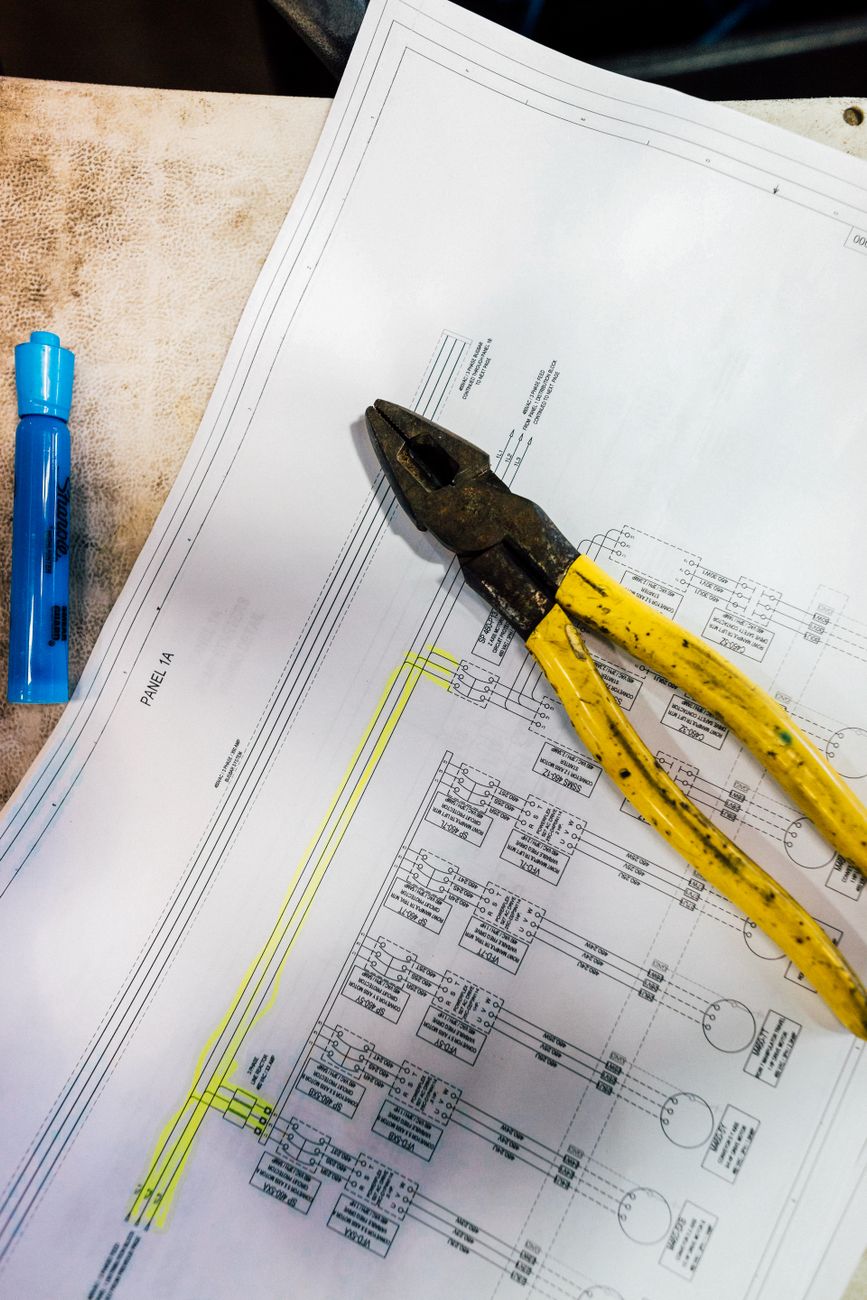
The work must be carried out using the applicable aircraft maintenance manual (AMM), wiring diagram manual (WDM), standard wiring practices manual (SWPM), structural repair data, component maintenance data, or other approved instructions. A technician should never select a repair method based only on physical similarity or personal experience.
A repair that appears electrically sound may still be unacceptable if it changes:
- Wire separation
- Shielding or screening
- Fire protection
- Electromagnetic compatibility
- Mechanical support
- Circuit protection
- System redundancy
- Environmental resistance
Why EWIS condition can deteriorate
Aircraft wiring is exposed to mechanical, thermal, chemical, and environmental stresses over long periods. Common causes of deterioration include:
- Vibration and repeated movement
- Contact with structure or adjacent equipment
- Excessive heat from engines, bleed-air ducts, or electrical equipment
- Hydraulic fluid, fuel, oil, cleaning products, or condensation
- Incorrect clamping or unsupported harness weight
- Poorly installed modifications
- Water ingress and corrosion
- Repeated maintenance access
- Incorrect replacement hardware
- Ageing insulation and seal degradation
Particular attention is required in high-risk zones, including engine bays, pylons, landing-gear areas, wheel wells, auxiliary power unit compartments, battery bays, and areas near fuel tanks or hydraulic systems.
Inspection should also consider the aircraft’s history. Previous modifications, recurring defects, water contamination, lightning strikes, overheating events, and reports of intermittent electrical faults can identify areas requiring more detailed examination. When diagnosing difficult electrical problems, technicians may also find our guide to troubleshooting intermittent aircraft electrical faults useful.
A methodical EWIS inspection
A robust inspection begins with the approved task instructions and aircraft records. Before accessing the wiring, the technician should confirm:
- The correct aircraft, zone, and wiring reference
- The applicable maintenance data and revision status
- Required isolation, circuit deactivation, and safety precautions
- Whether the inspection is general visual, detailed visual, zonal, or a specific troubleshooting task
- Whether access panels, insulation blankets, or equipment must be removed
- Whether additional precautions apply to fuel tanks, high-voltage systems, batteries, or electrically operated flight controls
The inspection should combine visual assessment with appropriate measurements or tests. Depending on the task, this may include continuity, insulation resistance, bonding resistance, voltage-drop, or circuit-protection checks. Test equipment must be suitable for the system. An inappropriate insulation-resistance test, for example, can damage sensitive electronic equipment.

Technicians should avoid disturbing a wiring installation unnecessarily. Harnesses must not be pulled, twisted, or repositioned beyond the limits allowed by the maintenance data. A wiring defect may be concealed by protective sleeving, clamps, or insulation, so access requirements must be followed rather than assumed.
Every defect should be described precisely. “Wiring damaged” is rarely sufficient. A useful record identifies the wire or bundle, location, type and extent of damage, affected system, and approved action taken or required.
Approved repair principles
EWIS repair is not simply a matter of restoring continuity. The repaired installation must retain its original electrical, mechanical, and environmental characteristics.
Important considerations include:
- Correct wire type, size, insulation, and specification
- Correct terminal, contact, splice, and connector selection
- Appropriate stripping and crimping methods
- Correct crimp-tool calibration and inspection
- Required separation from other wiring and aircraft systems
- Minimum bend radius
- Adequate strain relief and support
- Shield termination and bonding
- Protection against vibration, heat, fluids, and abrasion
- Correct circuit protection
- Proper identification and documentation
Where a manual provides a defined repair, that instruction must be followed. If the damage or proposed repair falls outside the available data, the matter should be referred through the operator’s engineering or technical-support process. Improvisation is not an acceptable substitute for approved data.
For general wiring practices and acceptable repair principles, technicians may consult the FAA’s AC 43.13-1B guidance, while remembering that the aircraft’s applicable approved data takes precedence.
After a repair, the technician should complete the specified inspections and functional tests. These may include an independent visual inspection, a bonding check, an operational test, or a system-level test. The result must be recorded in accordance with the organisation’s procedures.
Training and competence under UK and EASA arrangements
EWIS competence is based on the work a person performs. Relevant acceptable means of compliance and guidance material make clear that operators, type-certificate holders, supplemental type-certificate holders, maintenance organisations, and personnel performing modifications or repairs may need to strengthen their approach to wiring maintenance. This may require more than updating maintenance manuals and work cards. Training and working practices may also need to be reviewed.
Current regulatory material should always be checked before relying on a training or authorisation decision. The EASA Easy Access Rules for Continuing Airworthiness provide the relevant EASA rules and guidance, while the UK CAA Part-145 information supports organisations working within the UK framework.
A useful distinction is made between two groups of personnel:
- Qualified staff performing maintenance on wiring systems. These personnel carry out EWIS maintenance, with training based on their job description and the work performed, such as avionics technicians or Category B2 staff.
- Qualified staff performing maintenance inspections on wiring systems. These personnel perform EWIS inspections but do not carry out the maintenance itself. Their training is also based on their role and tasks, such as inspectors or technicians working in an inspection capacity.
The exact training content and recurrent requirements are controlled by the applicable organisation procedures, approved training programme, and regulatory framework. A technician should therefore establish whether a task requires EWIS inspection training, EWIS maintenance training, or both.
Under the UK system, UK Part-66 licensing and UK Part-145 organisational approval provide the relevant regulatory framework for UK-registered or UK-approved maintenance activities. In EASA Member States, the corresponding EASA Part-66 and Part-145 requirements apply. A Part-66 licence demonstrates specified knowledge and experience, but it does not by itself authorise every wiring task. The technician must also be appropriately authorised by the maintenance organisation and competent for the particular work.
For technicians building UK experience, EWIS-related tasks should be recorded accurately in the aircraft maintenance engineer’s logbook, commonly using a CAP 741 logbook. Entries should identify the aircraft, task, ATA or system reference where applicable, the nature of the work, and the level of involvement. Clear records can help demonstrate practical experience when applying for or extending a UK CAA licence or authorisation.
Accurate experience records are especially important when preparing a Part-66 application. If you need help reviewing your evidence and identifying gaps, use our specialist tool:
Analyze Your Logbook Today! Review your Part-66 experience records with AeroTech Careers’ Part 66 Logbook Analysis.
You can also learn more about how to fill out a CAP 741 logbook and the common CAP 741 logbook mistakes that can delay a licence application.
Personnel transferring from UK military service should retain detailed evidence of relevant EWIS training, trade qualifications, and aircraft experience. The UK CAA has pathways for recognising appropriate military experience, subject to its application requirements and supporting evidence. Military records should distinguish wiring inspection, fault-finding, repair, modification, and supervisory activity rather than describing all work simply as “avionics maintenance”.
US FAA A&P certification is a separate system. FAA training and experience may be relevant to an international career, but they should not be treated as equivalent to UK Part-66 or EASA Part-66 privileges without the applicable validation, conversion, or bilateral arrangements. The FAA’s mechanic certification guidance explains the US requirements.

Practical points for technicians
The following habits reduce EWIS risk:
- Read the wiring and zonal task before disturbing the installation.
- Use only the specified wire, connector, splice, and repair hardware.
- Check for secondary damage around the reported defect.
- Inspect clamps, supports, bonding, and clearances, not only insulation.
- Treat recurring intermittent faults as possible installation defects.
- Protect disconnected connectors and open wiring from contamination.
- Confirm that tools, crimpers, and test equipment are serviceable and calibrated.
- Restore identification, sleeving, lacing, and routing exactly as required.
- Record defects and corrective actions in sufficient technical detail.
- Escalate unclear or non-standard repairs through approved engineering channels.
Human factors can also affect the quality of wiring inspections and repairs. Time pressure, poor handovers, complacency, and unclear responsibility may allow defects to remain undiscovered. For further reading, see our article on just culture in aircraft maintenance.
Guidance such as Enhance Aeroplane EWIS Maintenance is also useful for understanding typical wiring installations and areas of concern. It should support, not replace, the aircraft’s approved maintenance data.
The central principle
Safe EWIS maintenance depends on treating wiring as a complete aircraft system. Inspection must identify more than visible damage, while maintenance must preserve the installation’s electrical, mechanical, and environmental design characteristics.
For UK and EASA technicians, the essential requirements are clear: use approved data, maintain task-specific competence, distinguish inspection from corrective maintenance, document the work accurately, and ensure that any authorisation matches the task being performed.



Login or register to join the conversation.
Join the discussion
0 comments