


If you’re a licensed aircraft engineer, mechanic, or avionics technician, create your free AeroTechCareers profile to showcase your competencies and be found by recruiters actively searching for engineers like you.
ECAM vs EICAS: How Aircraft Warning Systems Support Maintenance Troubleshooting
Modern aircraft warning systems do more than alert the flight crew to abnormal conditions. They also give maintenance engineers a structured starting point for fault investigation.
The two best-known architectures are Airbus's ECAM and Boeing's EICAS. Both combine engine indications, aircraft-system information and crew alerting, but they present information differently and support troubleshooting through different workflows.
Neither system replaces approved maintenance data or an engineer's technical judgement. Instead, each helps convert an in-service symptom into a defined maintenance task.
What are ECAM and EICAS?
ECAM: Electronic Centralised Aircraft Monitor
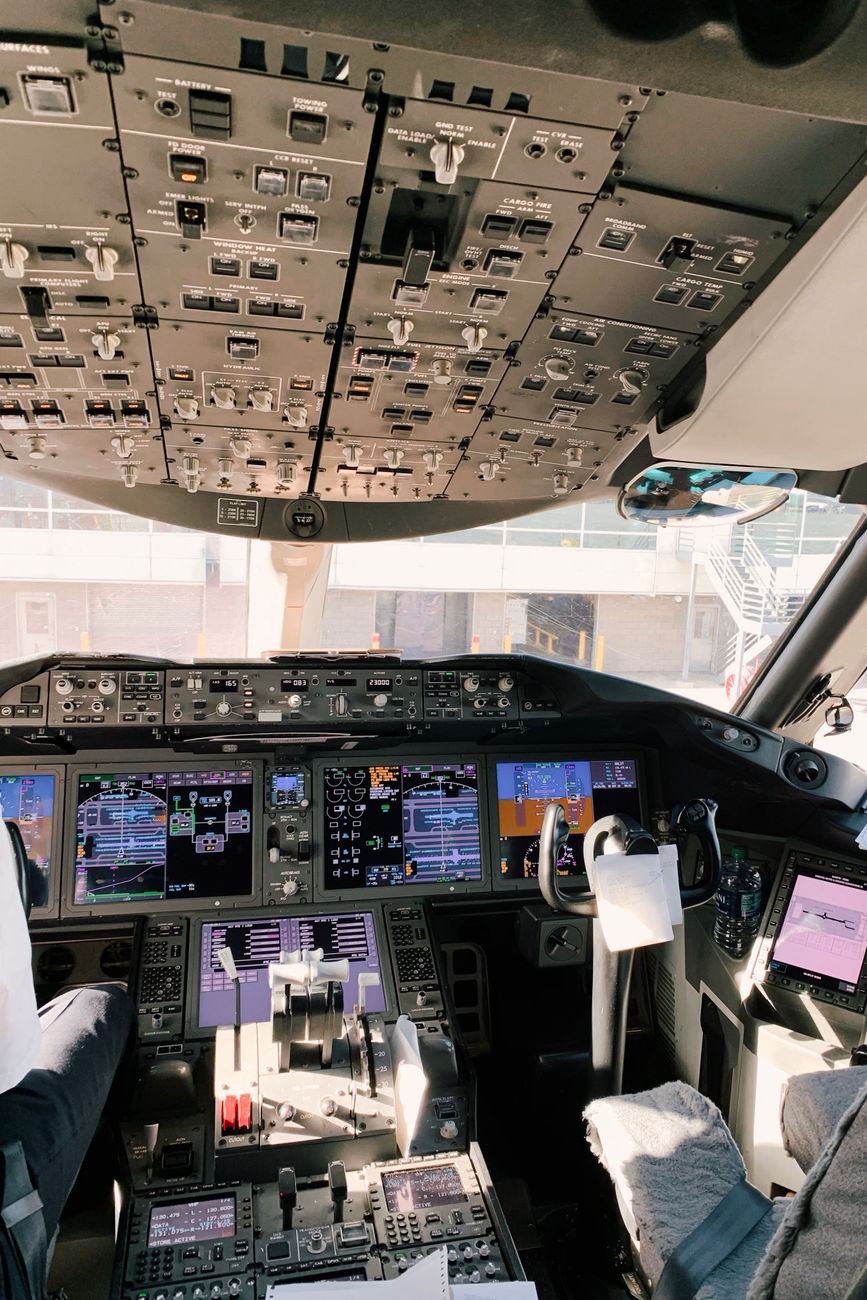
ECAM is most closely associated with Airbus aircraft. It normally comprises:
- an Engine/Warning Display (E/WD) showing engine parameters and current warnings;
- a System Display (SD) showing system pages and synoptic diagrams;
- colour-coded warnings, cautions and advisories;
- automatic presentation of relevant system pages;
- abnormal procedures linked to aircraft-system status.
When a fault occurs, ECAM normally presents the crew with a warning and an associated action sequence. It may also display a page showing the affected system, such as hydraulics, electrics, fuel, air conditioning or flight controls.

For maintenance, this provides useful context. An engineer may be able to establish:
- which system controller detected the abnormal condition;
- whether the fault is present, intermittent or historical;
- which valves, pumps, computers or sensors reported an unexpected state;
- whether the system response was consistent with the crew report;
- whether other systems were affected by the same event.
The ECAM indication is therefore an important fault symptom and source of recorded information. It is not, by itself, confirmation that a particular line-replaceable unit (LRU) has failed.
EICAS: Engine Indicating and Crew Alerting System
EICAS is widely associated with Boeing aircraft and with other aircraft types using a similar design philosophy. It typically displays:
- engine parameters;
- warning, caution and advisory messages;
- system status information;
- aircraft synoptic pages;
- maintenance or diagnostic information, depending on the aircraft type.
EICAS may show a message such as an oil-pressure caution, a flight-control computer fault or an electrical-bus abnormality. On many aircraft, further investigation is supported through maintenance pages, central maintenance computing functions or built-in test equipment (BITE).
Compared with ECAM, EICAS commonly separates crew alerting from some system-management information. The flight crew may receive the alert and procedural response on the primary displays, while the maintenance engineer accesses additional fault records through a maintenance control and display system, data-loading system or dedicated test interface.
The exact arrangement varies considerably. An aircraft described as an EICAS aircraft does not necessarily present maintenance data in the same way as another aircraft using the same architecture.
ECAM and EICAS: the practical difference for maintenance
The main difference is not that one system is suitable for maintenance and the other is not. Both support troubleshooting, but the information is organised differently.
- Primary association: ECAM is principally associated with Airbus, while EICAS is associated with Boeing and other aircraft using comparable architectures.
- Crew alerting: ECAM closely integrates warnings and associated procedures with system pages. EICAS presents engine indications and crew alerts with system and status information, often using separate maintenance access functions.
- System information: ECAM's automatic selection of relevant system pages is a prominent feature. EICAS aircraft use synoptic and maintenance pages to provide further system detail, depending on the type.
- Maintenance value: ECAM links the crew report to system status and displayed configuration. EICAS provides alert history, system status and, on some aircraft, BITE or central maintenance records.
- Main limitation: In both systems, the displayed fault may identify a monitored effect rather than the failed component. The cause may be a downstream effect, wiring fault or data-validity problem.
For an engineer, the critical issue is the same in both cases: the warning identifies a condition, not necessarily its root cause.
For example, a low hydraulic-pressure indication could result from:
- a failed pump;
- inadequate fluid quantity;
- a pressure-switch or transducer fault;
- a wiring or connector problem;
- a control-valve issue;
- a genuine system leak;
- a power-supply or data-bus fault;
- a transient condition that has already cleared.
Replacing the component named in an alert without completing the approved fault-isolation process can create repeat defects, unnecessary component removal and prolonged aircraft downtime.
How warning-system information supports troubleshooting
1. It preserves the operational symptom
The crew report remains important even when the warning has disappeared. ECAM or EICAS data can help correlate the report with:
- the phase of flight;
- engine or aircraft configuration;
- the electrical power source;
- system pressure, temperature or quantity;
- related alerts;
- whether the indication was transient or continuous.
This correlation can distinguish a genuine system failure from a sensor, display or data-acquisition problem.

2. It identifies affected systems and interfaces
Modern aircraft are highly interconnected. A single fault can produce several messages because one system depends on another for power, control or data.
A warning-system display may reveal that multiple alerts occurred at the same time. That can direct the engineer towards a common cause, such as:
- loss of an electrical bus;
- an avionics rack or remote data concentrator;
- an aircraft data network;
- a shared power supply;
- a system computer;
- a common ground or connector.
This is often more useful than treating each message as an independent defect. Related guidance on electrical fault investigation is available in our guide to troubleshooting intermittent aircraft electrical faults.
3. It provides access to fault history and BITE
Many aircraft systems perform built-in tests during operation, power-up or maintenance testing. BITE may record:
- fault codes;
- time or flight-cycle information;
- affected channels;
- the status of monitored inputs and outputs;
- whether a fault is active or dormant;
- the number of fault occurrences.
These records can help an engineer decide whether to perform a visual inspection, wiring check, operational test, component test or deeper fault isolation.
However, BITE results must be interpreted using the applicable aircraft maintenance manual (AMM), fault-isolation manual (FIM) or system description. A BITE code is not automatically a removal instruction. Engineers should use the aircraft manufacturer's approved technical publications and follow the organisation's approved procedures. The guide to AMM, IPC, SRM and wiring diagrams explains how these documents support maintenance decisions.
4. It supports fault reproduction
An intermittent warning is often the most difficult defect to isolate. ECAM or EICAS records can help establish the conditions under which it occurred, allowing maintenance staff to reproduce the fault during:
- a power-up test;
- a system operational test;
- a pressure or leak test;
- an engine ground run;
- a flight-control or electrical test;
- a component or wiring inspection.
The objective is to move from a recorded symptom to a repeatable fault condition.
A disciplined troubleshooting workflow
A warning-system message should normally be treated as the first step in a controlled process:
- Obtain the crew report. Record the exact message, display colour, associated indications, phase of flight and any action taken by the crew.
- Check aircraft records. Review the technical log, previous defects, deferred defects and recent maintenance. A repeat message may indicate an unresolved intermittent fault.
- Access recorded data. Examine ECAM or EICAS fault history, BITE reports and relevant central maintenance system records.
- Use the approved fault-isolation procedure. Follow the aircraft-specific FIM, AMM, system schematics and wiring manuals. The procedure should determine the required measurements and test sequence.
- Verify the fault before replacing a component. Confirm power supplies, grounds, inputs, outputs, connectors, wiring continuity and system configuration as directed by the maintenance data.
- Rectify and test. Carry out the approved rectification, clear or confirm the fault as required, and perform the specified operational or system test.
- Record the result accurately. The maintenance record should reflect the defect, troubleshooting performed, parts replaced and tests completed, not simply the original warning message.
This approach is particularly important on aircraft using integrated modular avionics, where a display message may be several processing stages removed from the physical fault.
What ECAM and EICAS cannot do
- They do not guarantee component-level diagnosis. A monitored parameter may be wrong because of the sensor, wiring, processor or data path.
- They cannot replace technical publications. The approved procedure determines the permitted test method and rectification.
- They may not capture every intermittent fault. A brief loss of power or data can disappear before engineers access the aircraft.
- They depend on correct configuration and software. Fault records can be affected by modifications, software standards and maintenance messages.
- They do not remove the need for physical inspection. Leaks, chafing, connector damage, contamination and loose bonding may not be identified by an electronic warning system.
- They do not expand certification privileges. Access to a fault code does not mean that every engineer is authorised to troubleshoot, replace or certify the affected system.
That final point is particularly significant in the UK and European maintenance environment.
Part-66 competence and troubleshooting privileges
Under the UK CAA and EASA Part-66 framework, the scope of work depends on the licence category, aircraft type privileges, organisational procedures and the task being performed. The current EASA Easy Access Rules for Continuing Airworthiness provide the European regulatory reference, while the UK CAA airworthiness guidance sets out the applicable UK framework.
A B1 category covers maintenance on aircraft structure, powerplant, mechanical and electrical systems, together with avionics systems requiring simple tests to prove serviceability and not requiring troubleshooting. B1 subcategories include:
- B1.1: turbine aeroplanes;
- B1.2: piston-engine aeroplanes;
- B1.3: turbine helicopters;
- B1.4: piston-engine helicopters.
A B3 licence is limited to certain non-pressurised aeroplanes of 2,000 kg maximum take-off mass and below. It covers structure, powerplant, mechanical and electrical systems, and avionics systems requiring only simple tests to prove serviceability and not requiring troubleshooting.

In the Part-66 descriptions, B3 work is associated with both base and line maintenance contexts, while the relevant B1 privileges also distinguish between work requiring only simple serviceability tests and work involving more extensive troubleshooting. The practical implication is clear: an ECAM or EICAS message may help an engineer understand the defect, but the licence category and maintenance organisation authorisation determine who may carry out and certify the troubleshooting. The comparison of EASA certification privileges and FAA A&P sign-off privileges provides additional context on how authorisation frameworks differ.
More complex avionics fault isolation will commonly require appropriately authorised avionics personnel, such as a B2 licence holder, together with the relevant aircraft type training and organisational approval. The exact authorisation remains dependent on the maintenance organisation's procedures and the aircraft task.
Experience used to support a UK Part-66 application or demonstrate practical competence should be recorded clearly, normally using an appropriate CAP 741-style maintenance experience logbook or an equivalent controlled record. The UK CAA CAP 741 guidance is the relevant official reference for recording aircraft maintenance experience. Entries should show the aircraft type, task, system involved, troubleshooting performed and level of participation. A vague entry such as “ECAM fault rectified” provides much less useful evidence than a precise record of the warning, diagnostic procedure, test results and approved rectification.

For practical guidance, read how to fill out a CAP 741 logbook and learn how to build qualifying Part-66 B1 experience.
Keep your maintenance experience organised with Part 66 Logbook Analysis. Analyse your records today and identify gaps before they affect your licence application.
Personnel transferring from military aviation should have their experience and qualifications assessed through the relevant UK CAA and UK Ministry of Defence pathways. Military experience can be valuable, but it must be mapped to the applicable civilian licensing, knowledge, experience and type-privilege requirements rather than assumed to transfer automatically.
Why system knowledge matters
Understanding the display architecture is only part of the skill. Engineers also need to understand:
- aircraft electrical distribution;
- sensors and transducers;
- control computers and remote data concentrators;
- ARINC and other aircraft data buses;
- signal validation and redundancy;
- BITE logic;
- software and configuration control;
- wiring and bonding;
- the difference between a system command and a system response.
For ECAM, this may mean understanding how a system computer generates a warning and how the SD page represents valve, pump or pressure-switch status. For EICAS, it may involve linking a crew alert to engine data, system synoptics and maintenance fault records held elsewhere in the aircraft.
The deeper the integration, the less reliable it is to troubleshoot from the message wording alone. Physical bonding and grounding issues can also affect electrical and avionics behaviour, as explained in our guide to aircraft bonding and grounding checks.

ECAM and EICAS as decision-support tools
ECAM and EICAS have changed maintenance troubleshooting by providing a common information bridge between flight crew, aircraft systems and maintenance personnel.
Their greatest value is not that they identify every failed component. It is that they:
- preserve the operational symptom;
- show relationships between alerts;
- expose system status;
- provide access to recorded faults;
- guide engineers towards the correct maintenance data;
- reduce the time needed to define an initial troubleshooting path.
The correct engineering response is therefore neither to ignore the warning nor to accept it as a complete diagnosis. The message is evidence. Aircraft records, BITE data, maintenance manuals, physical inspection and authorised engineering judgement complete the diagnosis.
In both ECAM and EICAS aircraft, effective troubleshooting depends on using the warning system as a structured starting point, within the limits of the aircraft design, the approved procedure and the engineer's Part-66 privileges.
For more technical maintenance guidance, visit the AeroTech Careers Blog.



Login or register to join the conversation.
Join the discussion
0 comments