

.jpg)
If you’re a licensed aircraft engineer, mechanic, or avionics technician, create your free AeroTechCareers profile to showcase your competencies and be found by recruiters actively searching for engineers like you.
Part-66 aircraft maintenance experience requirements: what counts and how to prove it
Becoming a licensed aircraft maintenance engineer involves more than passing examinations and collecting certificates. Applicants must also demonstrate practical maintenance experience on operating aircraft in a properly controlled environment.
This experience provides the evidence that an applicant has developed the judgement, skills and familiarity required to work safely within the privileges of the requested licence category. This guide explains what experience may count, how it should be recorded and how it can be supported during a UK CAA application.
What does practical maintenance experience mean?
Under Part-66, practical experience means hands-on maintenance work carried out on operating aircraft. It should demonstrate that you have:
- Performed real maintenance tasks rather than only classroom or simulator exercises.
- Worked on aircraft in operational service.
- Covered a representative cross-section of tasks relevant to your licence category.
- Gained experience under appropriate supervision.
- Worked within approved maintenance procedures and organisational controls.
- Developed competence across the systems, structures, components and maintenance activities relevant to the licence or rating sought.
The phrase representative cross-section is important. Repeating the same straightforward task may demonstrate proficiency in that task, but it does not necessarily show that you are ready to exercise Part-66 privileges across a wider maintenance environment.
For example, a B2 applicant whose record contains only battery changes and associated paperwork may not demonstrate broad avionics competence. The record should reflect suitable exposure to electrical, instrument, communication, navigation, automatic flight, surveillance and other relevant systems, depending on the category and rating sought. Applicants should also review the official EASA Part-66 information when comparing European licensing requirements.

Experience requirements depend on the licence category
The amount and type of experience required depend on several factors, including:
- The Part-66 category or subcategory.
- Whether you have completed relevant technical training.
- Whether the experience was gained in an approved organisation.
- Whether you are applying for a full category or a limited category such as B2L.
- Whether you are applying for a basic licence or adding an aircraft type rating.
- The authority assessing the application.
For many applicants, approved basic training reduces the amount of practical experience required. It does not remove the need to demonstrate real maintenance experience. The practical element must still be documented and independently supported.
Always check the current UK CAA Part-66 requirements and guidance and applicable Acceptable Means of Compliance before relying on a particular calculation. The applicable route depends on the applicant's training, employment and licensing history.
B2L experience requirements
Applicants for the B2L category must demonstrate one of the applicable experience routes.
Where the applicant has no previous relevant technical training, the requirement is generally:
- Three years of practical maintenance experience on operating aircraft, covering the corresponding B2L system rating or ratings.
The experience must be relevant to the systems for which the applicant is applying. B2L experience must therefore be linked to the specific system rating or ratings selected.

Depending on the applicant's circumstances, other routes may be available, including:
- Three years of experience exercising Category B1 or B2 privileges on aircraft other than complex motor-powered aircraft.
- Three years of experience as support staff in accordance with point 145.A.35.
- A combination of applicable experience routes.
The precise requirements and permitted combinations should be confirmed against the current UK Part-66 rules and CAA guidance. In every case, the experience should be practical and should cover a representative cross-section of maintenance tasks on operating aircraft relevant to the category sought.
A job title alone is not sufficient. Terms such as “avionics technician”, “maintenance mechanic” or “support staff” describe employment, but the CAA will need evidence of the work actually performed.

What experience is likely to count?
Experience normally needs to be relevant to the privileges, category or rating requested. Useful experience may include the following.
Mechanical categories
- Scheduled inspections.
- Defect rectification.
- Component removal and installation.
- Servicing and replenishment.
- Structural inspections and repairs.
- Engine or powerplant maintenance.
- Flight control inspections and rigging.
- Landing gear and braking system maintenance.
- Functional checks and operational tests.
- Troubleshooting and fault isolation.
B2 and B2L applicants
- Wiring inspections and repairs.
- Continuity and insulation checks.
- Avionic component removal and installation.
- Communication and navigation system maintenance.
- Instrument system maintenance.
- Automatic flight system troubleshooting.
- Surveillance system maintenance.
- Electrical power system checks.
- Software loading or configuration tasks, where appropriately controlled.
- Operational and functional tests.
- Fault diagnosis using approved maintenance data.
Tasks must be carried out in accordance with approved or acceptable maintenance data and within the organisation's authorisation and supervision arrangements. For further technical preparation, see the guide to Part-66 B2 and B2L avionics licences.
Experience gained entirely on classroom equipment, disconnected training panels or non-operational aircraft may support professional development, but it may not satisfy the practical experience requirement by itself.
Does military or public-service experience count?
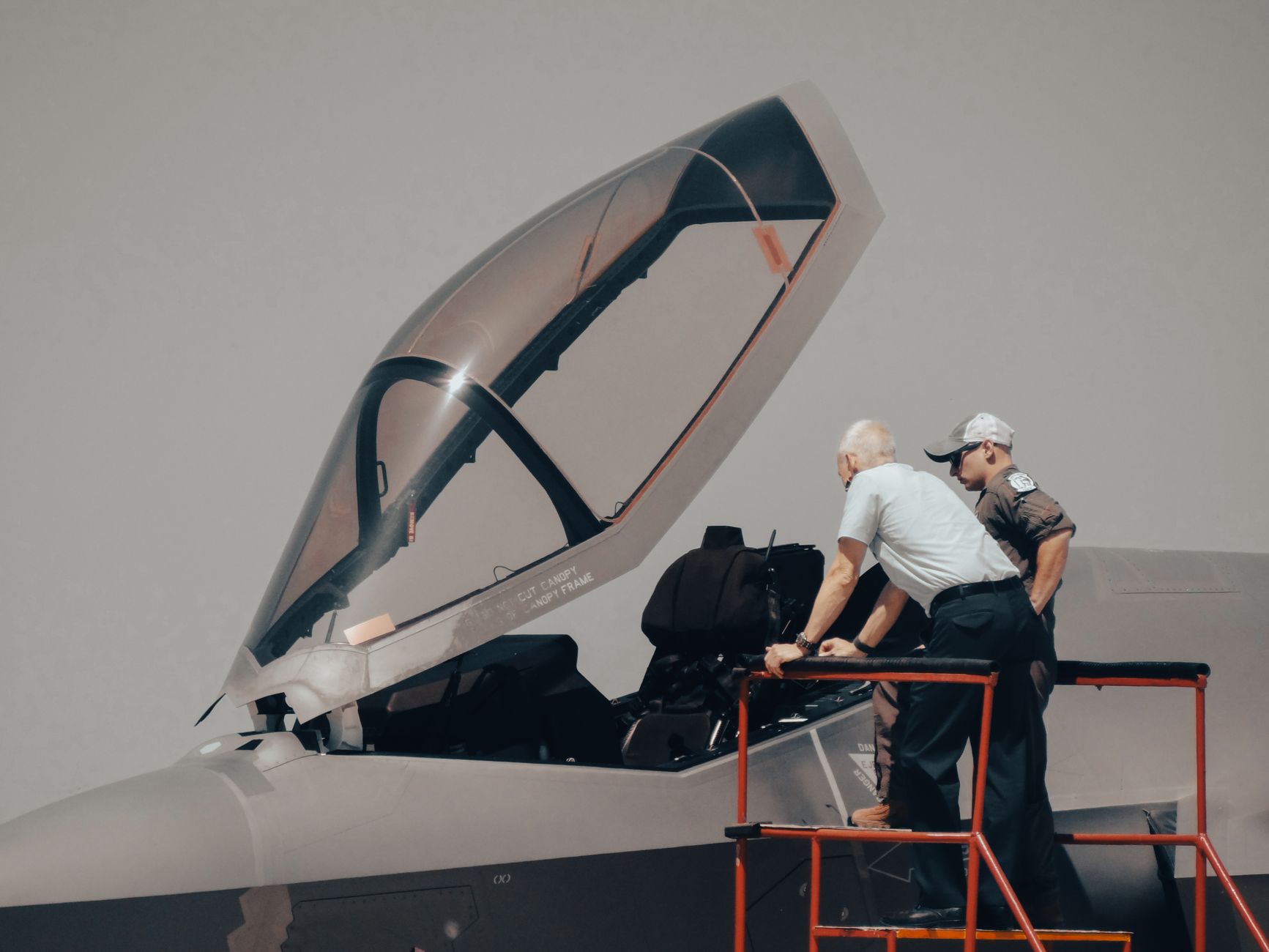
Relevant maintenance experience can be gained in a range of environments, including:
- Civilian Part-145 organisations.
- Military maintenance organisations.
- Police aviation units.
- Fire and rescue aviation operations.
- Coastguard organisations.
- Other maintenance organisations approved or recognised by an appropriate national authority.
The important questions are whether the work was genuine and relevant, whether it was properly controlled, and whether it can be supported by acceptable records.
You may need to provide additional evidence explaining:
- The approval or regulatory status of the organisation.
- The aircraft types and systems maintained.
- Your role and level of responsibility.
- The supervision and certification arrangements.
- The dates and amount of experience.
- The tasks you personally performed.
Experience on operating aircraft is essential
A common problem in licence applications is the failure to distinguish aircraft-related experience from maintenance experience on operating aircraft.
The following may provide useful background, but may not be sufficient on their own:
- Workshop-only component work.
- Classroom practical exercises.
- Training aircraft that are not in operational service.
- Manufacturing experience with no maintenance exposure.
- Design or engineering office work.
- General mechanical or electrical employment unrelated to aircraft maintenance.
- Shadowing without documented task involvement.
- Repeated administrative or stores duties.
Some of these activities may count in limited circumstances, particularly where they form part of a relevant approved maintenance environment. Do not assume that time spent near aircraft automatically qualifies as licence experience. A strong application makes clear that you worked on aircraft in operation, or on aircraft maintained as part of an active operational fleet.
The Part-66 logbook and experience record
A logbook or equivalent experience record demonstrates that the required practical maintenance experience has been completed. It should allow the authority to establish:
- What task was performed.
- When and where it was performed.
- Which aircraft or component was involved.
- Which system or ATA chapter was relevant.
- What maintenance data was used.
- Whether you performed, assisted with or supervised the task.
- Who verified or signed the entry.
- How the task relates to the category or rating sought.
The record should be sufficiently clear for an independent reviewer to follow your development. An entry stating only “maintenance carried out as required” provides little useful evidence. For practical guidance, read how to fill out a CAP 741 logbook, or use Part 66 Logbook Analysis to review your records for completeness and consistency.
Information to include in each entry
A useful entry may contain:
- Date.
- Aircraft registration or identifier.
- Aircraft type and model.
- Task description.
- ATA chapter or system.
- Maintenance reference, such as an AMM, SRM, WDM or approved task card.
- Your role in the task.
- Details of inspection, testing, troubleshooting, removal, installation or rectification.
- The supervising or certifying staff member.
- Signature, stamp, approval number or other required identification.
- Relevant remarks, limitations or follow-up actions.
The exact format may vary. The essential principles are traceability, accuracy and credibility.
How can experience be proved?
The UK CAA requires applicants to provide practical maintenance experience in accordance with UK AMC 66.A.30(e), in a form and manner acceptable to the CAA. The evidence should be signed by an appropriate signatory. The UK CAA aircraft maintenance engineer guidance should be checked for the latest application information and forms.

Acceptable formats may include:
- A structured Part-66 experience logbook.
- An employer-maintained task or experience record.
- A company maintenance log or task summary supported by an authorised statement.
- A combination of logbook entries, employment records and signed employer declarations.
- Other records accepted by the CAA for the particular application.
The safest approach is generally to maintain a detailed personal logbook while gaining the experience, supported by the organisation's own records. Reconstructing several years of maintenance from memory creates avoidable gaps and inconsistencies.
Who should sign the records?
Entries should be signed or certified by an appropriate person who can verify that the work was performed. This may include an appropriately authorised:
- Certifying staff member.
- Supervising engineer.
- Maintenance organisation representative.
- Quality or compliance representative.
- Employer or other person recognised under the relevant procedures.
The signatory should have sufficient knowledge of the work and authority to confirm it. A signature from someone who was not present, cannot identify the task or has no relevant approval may carry little weight.
Signatures should be:
- Legible.
- Dated.
- Traceable to the signatory.
- Supported by an approval number, licence number, company stamp or equivalent identification where applicable.
- Applied only to entries that the signatory has actually reviewed.
A signature is an attestation that the information is accurate, not merely an administrative formality.
How to show a representative range of tasks
A good experience record should show breadth as well as duration. Review your logbook periodically against:
- The licence category.
- The relevant subcategory.
- The B2L system rating or ratings.
- ATA chapters.
- The aircraft types on which you have worked.
- The maintenance activities you have performed.
- The level of responsibility you have held.
For example, a B2L applicant seeking a communication and navigation system rating should record more than general electrical tasks. The record should show practical involvement with the relevant communication and navigation systems, including inspection, testing, defect investigation, component work and functional checks where applicable.
Review the record before the end of the required period. This allows you to identify gaps while there is still an opportunity to gain relevant experience.
Common mistakes that weaken an application
Recording duties instead of tasks
“Worked in base maintenance” is a job description, not an experience entry. State what you actually did.
Listing tasks without dates or aircraft details
Without dates, aircraft identifiers or system information, it may be difficult to verify whether the experience is relevant.
Relying only on employment letters
An employment letter can confirm that you worked for an organisation, but it may not prove the maintenance tasks you performed. Use it as supporting evidence, not as a replacement for a properly maintained experience record. You can also review the guide to common CAP 741 logbook mistakes before submitting an application.
Failing to distinguish assistance from completion
Be accurate about whether you performed, assisted with, observed, inspected or tested a task, and whether you certified it. Overstating your role can damage the credibility of the entire application.
Leaving signatures until later
Have entries signed as the work is completed. Supervisors may change roles or become unavailable, making retrospective verification difficult.
Recording only routine tasks
Routine servicing is useful, but a strong record should also show troubleshooting, inspections, component work, system testing and less frequent maintenance activities relevant to your category.
Assuming an EASA document automatically transfers to a UK application
Following the UK's regulatory changes, applicants should check the current UK CAA position on the acceptability of EU or EASA Certificates of Recognition and related licensing evidence after 1 January 2023.
An EASA Certificate of Recognition may not automatically produce the result expected for a UK Part-66 application. Check the applicable CAA guidance before relying on it. Applicants considering more than one authority can also read how to choose an EASA competent authority for a Part-66 licence.
A practical evidence pack
When preparing an application, assemble a complete evidence pack containing, where applicable:
- Your completed experience logbook or equivalent record.
- Employer letters confirming dates and roles.
- Details of the organisation's approval or regulatory status.
- Aircraft types and registrations worked on, where available.
- Signed task records and company task cards.
- Evidence of supervision and certifying staff involvement.
- Training certificates relevant to the experience route.
- Records supporting military or public-service maintenance experience.
- A summary mapping your experience to the requested category or system rating.
- Any additional forms or declarations required by the UK CAA.
Keep original records wherever possible and retain copies of everything submitted.
How to make your experience easier to assess
Before submitting, review the record from the perspective of someone who has never met you. Ask:
- Is the total experience period clear?
- Was the experience gained on operating aircraft?
- Are the tasks relevant to the category?
- Is there a representative spread of maintenance activities?
- Are the aircraft and systems identifiable?
- Were entries signed by appropriate people?
- Can the organisation and signatories be verified?
- Are gaps or unusual periods explained?
- Does the evidence match the requested licence category or B2L system rating?
- Have you checked the latest UK CAA guidance and forms?
Resolve any uncertainty before submitting rather than waiting for a request for further information.
Conclusion
Part-66 experience requirements are intended to establish whether an applicant can demonstrate real, relevant and supervised maintenance experience on operating aircraft.
For B2L applicants, this means meeting the applicable experience route, covering the relevant system rating or ratings and demonstrating a representative cross-section of practical maintenance tasks. For every applicant, it means keeping a detailed, accurate and signed record in a form acceptable to the UK CAA and compliant with UK AMC 66.A.30(e).
Start the logbook early, record the work accurately, obtain signatures promptly and keep the supporting evidence organised. These steps make the application easier to verify and reduce the risk of avoidable delays.



Login or register to join the conversation.
Join the discussion
0 comments