


If you’re a licensed aircraft engineer, mechanic, or avionics technician, create your free AeroTechCareers profile to showcase your competencies and be found by recruiters actively searching for engineers like you.
Human Factors Behind Independent Inspection Failures in Aircraft Maintenance
Independent inspections are intended to prevent a maintenance error from developing into an unsafe condition. They are particularly important where an incorrect installation, adjustment, locking method or control-system connection could affect the aircraft’s continued airworthiness.
However, an independent inspection is not automatically an effective safety barrier. Its success depends on how the task is selected, how the inspection is performed and whether the inspector is genuinely independent of the original work. Human factors can undermine each stage.
The Purpose of an Independent Inspection
An independent inspection is a separate examination of a maintenance task by a person who was not involved in carrying out the original work. Its purpose is to identify an error before the aircraft is released to service.
This differs from a duplicate inspection performed by the person who completed the task. A second check by the task performer may detect some errors, but it remains vulnerable to the same assumptions, expectations and memory limitations that affected the original work.
The independent inspector should:
- Understand the task and its safety consequences.
- Use the approved maintenance data.
- Examine the work directly rather than relying on the first person’s explanation.
- Confirm the correct configuration, installation, security and functional condition.
- Record the inspection in accordance with the organisation’s procedures.
- Avoid allowing production pressure or familiarity with the first inspector to influence the result.
The inspection is not simply a second signature. It is a separate human-performance activity requiring sufficient time, access, information and authority. For a wider explanation of competence, authorisation and independence requirements, see our guide to who can perform an independent inspection.

UK and European Regulatory Context
For organisations operating under UK CAA or EASA Part-145 approvals, procedures for critical maintenance tasks and error capture form part of the organisation’s approved maintenance and safety arrangements. Part-145 requires organisations to establish systems and procedures designed to prevent maintenance errors and capture errors affecting critical systems. Organisations should consult the current UK CAA Part-145 guidance and the EASA Part-145 information when reviewing their applicable requirements.
In the UK, historical guidance concerning duplicate inspections is found in:
- BCAR A6-2, including requirements associated with duplicate inspections.
- BCAR A5-3, concerning vital points.
- CAAIP Part 2, IL 2-13, Control Systems, which provides detailed best-practice guidance for carrying out duplicate inspections.
Although UK organisations may now operate under UK Part-145 and associated CAA requirements, these references remain important when understanding the development of UK duplicate-inspection practice and the treatment of vital control-system work. Always verify the current applicable requirements with the UK Civil Aviation Authority or the relevant competent authority.
CAAIP Part 2, IL 2-13 emphasises that the inspection process itself can fail. The fact that a task has been inspected does not prove that an error has been detected. The guidance identifies three important considerations when deciding whether a task warrants a duplicate inspection:
- The criticality of the task and the consequences of failure.
- The vulnerability of the task to human error, informed by previous incidents, experience and risk assessment.
- The presence or absence of other checks, such as functional checks or operational testing.
The guidance also makes clear that an independent inspection is generally more effective than a second inspection by the person who performed the task. Duplicate inspections are an effective error-trapping mechanism, but they should not be treated as the only protection because they are not always successful.
Precise implementation remains dependent on the organisation’s approved procedures, the aircraft type and the applicable maintenance data. Part-66 licensing establishes the competence framework for certifying staff, but a licence alone does not guarantee that an individual will perform an effective independent inspection. Practical competence, task-specific knowledge, authorisation, independence and suitable working conditions remain essential.

How Human Factors Defeat the Inspection
Complacency and Expectation
A familiar task can create an expectation that the work is correct. The inspector may recognise the task as routine and unconsciously reduce the depth of the examination.
This is particularly hazardous when the original maintenance action appears complete, clean and professionally recorded. Visual quality can create false confidence. A correctly fitted access panel, for example, does not confirm that the control connection beneath it is correctly rigged or secured.
An inspector who expects to find no defect may also interpret ambiguous evidence in the most favourable way. This is a form of confirmation bias. The broader effects of human performance in aviation are also discussed in SKYbrary’s human factors guidance.
Excessive Trust in the First Maintainer
Independent inspection can be weakened by professional familiarity. The second inspector may know that the first maintainer is experienced, competent or normally reliable. Instead of conducting an independent examination, the inspector may accept verbal assurance such as “it is all complete” or “it has been checked already”.
The risk increases where the inspector was informally involved in planning the work or discussed how the task should be performed. Even without physically touching the aircraft, the inspector may develop the same assumptions as the original maintainer.
Independence therefore concerns more than physical separation. It requires independent judgement based on direct examination and approved data.
Time Pressure and Production Demand
Late aircraft, manpower shortages, shift handovers and departure deadlines can turn an inspection into a confirmation exercise. The inspector may feel pressure to sign quickly so that panels can be closed or the aircraft released.
Under time pressure, common shortcuts include:
- Checking only the most visible part of the installation.
- Relying on the task performer’s account.
- Omitting a step from the inspection sequence.
- Accepting an incomplete work area.
- Signing before all evidence is available.
- Treating a functional check as proof that every installation detail is correct.
These behaviours are not necessarily deliberate violations. They may arise because the organisation has created conditions in which a thorough inspection is difficult to complete.
Interruptions and Loss of Attention
Independent inspections often take place in noisy, congested maintenance environments. Radio calls, telephone conversations, requests from supervisors and unrelated technical questions can break the inspector’s attention.
An interruption is particularly dangerous when the inspector returns to a multi-step task without a clear point of resumption. The inspection may then continue from memory rather than from the approved sequence. A step can be mentally marked as complete even though it was never examined.
Procedures should make it possible to stop and restart an inspection without ambiguity. Where an interruption occurs during a critical check, restarting the relevant inspection sequence may be safer than relying on memory.
Inadequate Access and Poor Visual Conditions
An inspector cannot verify what cannot be seen, reached or reliably identified. Limited access, poor lighting, contamination, awkward posture and congested installations can all reduce inspection quality.
Human performance is also affected by the physical effort required to reach the inspection point. Discomfort and fatigue encourage a superficial examination, particularly where the work area is difficult to access and the inspector believes the installation is probably correct.
If access prevents an effective inspection, the correct response is not to sign based on assumption. The work may need to be exposed, reconfigured or inspected using an approved alternative method.
Ambiguous Work Status
Confusion can arise when it is unclear whether a task is complete, partially complete or awaiting inspection. Open panels, untagged components, incomplete paperwork and poor handover information make it difficult for the independent inspector to establish the true status of the work.
A verbal handover can also omit important information, such as:
- Which components were disturbed.
- Which fasteners or locking devices were replaced.
- What remains to be completed.
- Whether a functional check has been carried out.
- Whether another person has already inspected part of the task.
Clear task identification and physical status control are therefore human-factors controls, not merely administrative requirements. A structured aircraft maintenance shift handover can help preserve this information between teams.
Authority Gradients and Reluctance to Challenge
An inspector may identify an anomaly but hesitate to challenge a more senior or highly experienced colleague. This can occur where the workplace culture treats questions as criticism or where production staff are perceived to have priority over inspection staff.
An effective independent inspection requires the inspector to have the authority to stop the task, request further evidence and record a discrepancy without fear of blame. The organisation’s response to reported errors is critical. If personnel are punished for raising legitimate concerns, defects will be concealed or accepted.
Common Failure Patterns
Familiarity with the Task
- Failure mode: The inspector performs a rapid visual confirmation.
- Effective control: Use a defined inspection sequence and approved data.
Trust in the Original Maintainer
- Failure mode: Verbal assurance replaces direct examination.
- Effective control: Require independent verification of each critical element.
Production Pressure
- Failure mode: The inspector signs before full access or testing is available.
- Effective control: Protect inspection time and prevent premature sign-off.
Poor Handover
- Failure mode: The inspector does not know what was disturbed.
- Effective control: Use clear task status, work cards and shift-handover information.
Interrupted Inspection
- Failure mode: Steps are missed after attention is diverted.
- Effective control: Restart the relevant sequence or record the exact stopping point.
Limited Access
- Failure mode: Hidden errors remain unexamined.
- Effective control: Provide suitable access or an approved alternative inspection method.
Authority Gradient
- Failure mode: An anomaly is not challenged.
- Effective control: Support stop-work authority and a just reporting culture.
Shared Assumptions
- Failure mode: Both people overlook the same error.
- Effective control: Ensure genuine independence and use independent data review.
Why Functional Checks Are Not Always Enough
A functional check is an important additional barrier, but it does not necessarily detect every maintenance error. A system may appear to operate while still containing an incorrectly secured, incorrectly routed or incorrectly configured component.
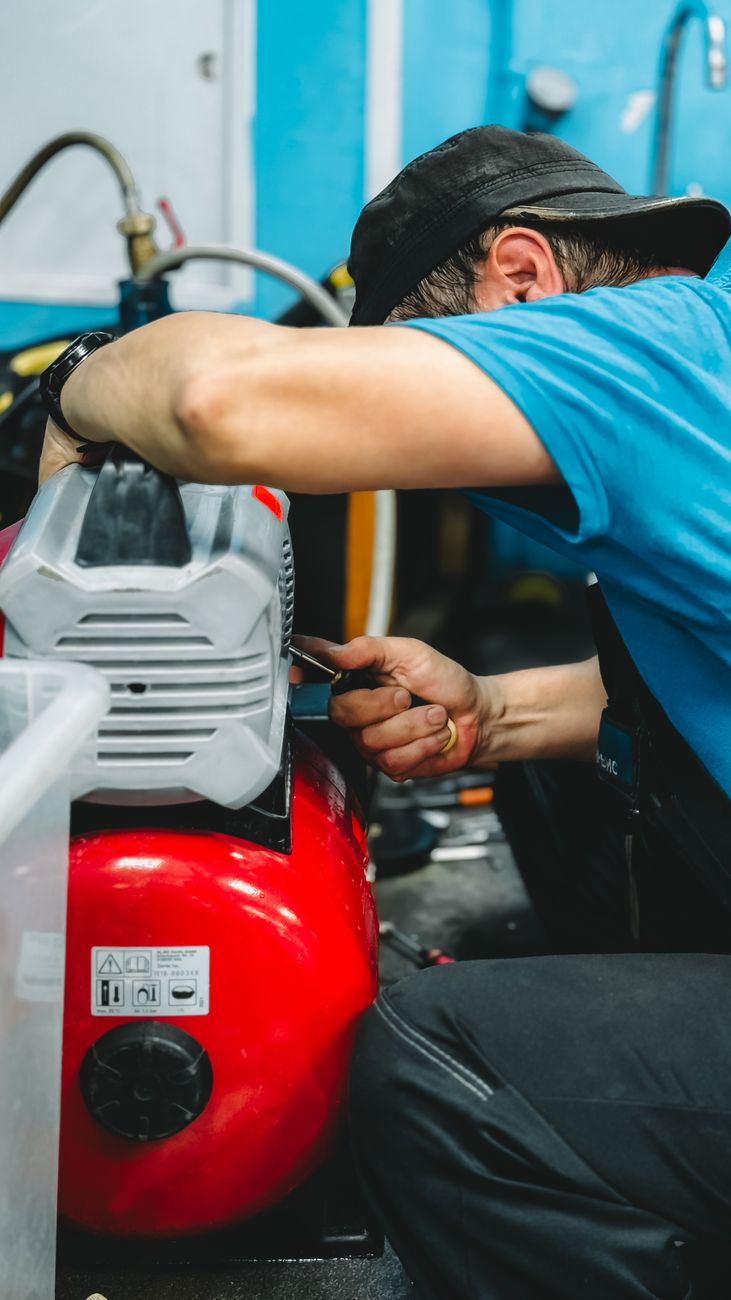
For example, a control system may move during a functional check even though a locking device has not been correctly installed. The system’s immediate operation does not prove that the maintenance task has been completed in accordance with the approved data.
Functional checks should therefore complement, not replace, an appropriate independent inspection. The inspection and the functional check address different failure modes. Approved maintenance instructions, including the relevant AMM, SRM and wiring information, should always be followed. Our guide to aircraft maintenance manuals and technical data explains how these documents support maintenance decisions.
The Role of the Wider Error-Management System
Independent inspections should be selected through risk assessment rather than applied mechanically to every task. The assessment should consider the consequences of failure, the likelihood of human error, previous events, the complexity of the task and the effectiveness of other barriers.
The organisation should also examine why an inspection failed. Useful questions include:
- Was the inspector properly authorised and competent for the task?
- Was the task genuinely independent?
- Was the approved maintenance data available and understood?
- Did the physical environment support a thorough inspection?
- Was the inspection performed under realistic time conditions?
- Were interruptions, fatigue or shift changes involved?
- Did the procedure define what had to be inspected?
- Did the organisational culture encourage challenge and reporting?
The objective should not be to assign blame to the final person who signed the inspection. A failed inspection may reflect weaknesses in task design, staffing, supervision, access, documentation or organisational priorities. This is consistent with the wider safety principle that aircraft maintenance depends on technical competence, accountability and human-factors awareness, as explored in why aircraft maintenance is safety-critical.
Pilot pre-flight checks can provide another opportunity to detect certain maintenance errors, although they are not specifically intended to replace maintenance inspection controls. They should be regarded as an additional barrier, rather than evidence that an ineffective independent inspection is acceptable. For more information, see our guide to aircraft pre-flight and post-flight inspections.
Maintain stronger Part-66 records with Part 66 Logbook Analysis. Analyse your logbook today and make your maintenance experience easier to review and manage.
Conclusion
Independent inspections are valuable because they introduce a separate opportunity to detect maintenance errors. Their effectiveness, however, depends on human performance and organisational conditions.
The principal risks are complacency, confirmation bias, excessive trust, time pressure, interruption, poor access, unclear task status and reluctance to challenge. UK CAA and EASA-aligned maintenance organisations must therefore treat independent inspection as a controlled safety process rather than a paperwork requirement.
The central principle is clear: an independent inspection can trap an error, but it can also fail. It should be supported by sound task selection, competent and genuinely independent inspectors, suitable working conditions, functional checks, effective handovers and a reporting culture that allows maintenance personnel to stop and challenge unsafe work.




Login or register to join the conversation.
Join the discussion
0 comments