



If you’re a licensed aircraft engineer, mechanic, or avionics technician, create your free AeroTechCareers profile to showcase your competencies and be found by recruiters actively searching for engineers like you.
How to Prepare for an Aviation Shift-Work Job Interview
Shift work is a normal part of aviation, whether you are maintaining aircraft overnight, operating in an airport control tower, working on the ramp or supporting flight operations. It is also a safety-critical environment.
During an interview, employers assess more than technical ability. They want evidence that you understand fatigue, can remain reliable at unsocial hours and will make safe decisions when workload and alertness are under pressure.
The strongest candidates do not simply say, “I am happy to work nights.” They show that they understand what night work involves and have a practical plan for managing it.
Research the roster before the interview
Start by finding out how the role is organised. “Shift work” can mean very different things across aviation employers:
- Fixed nights
- Rotating early, late and night shifts
- Two-shift or three-shift systems
- Long day shifts followed by night duties
- Compressed working patterns
- Weekend and public-holiday coverage
- Standby or short-notice call-in duties
- Seasonal or irregular operational rosters
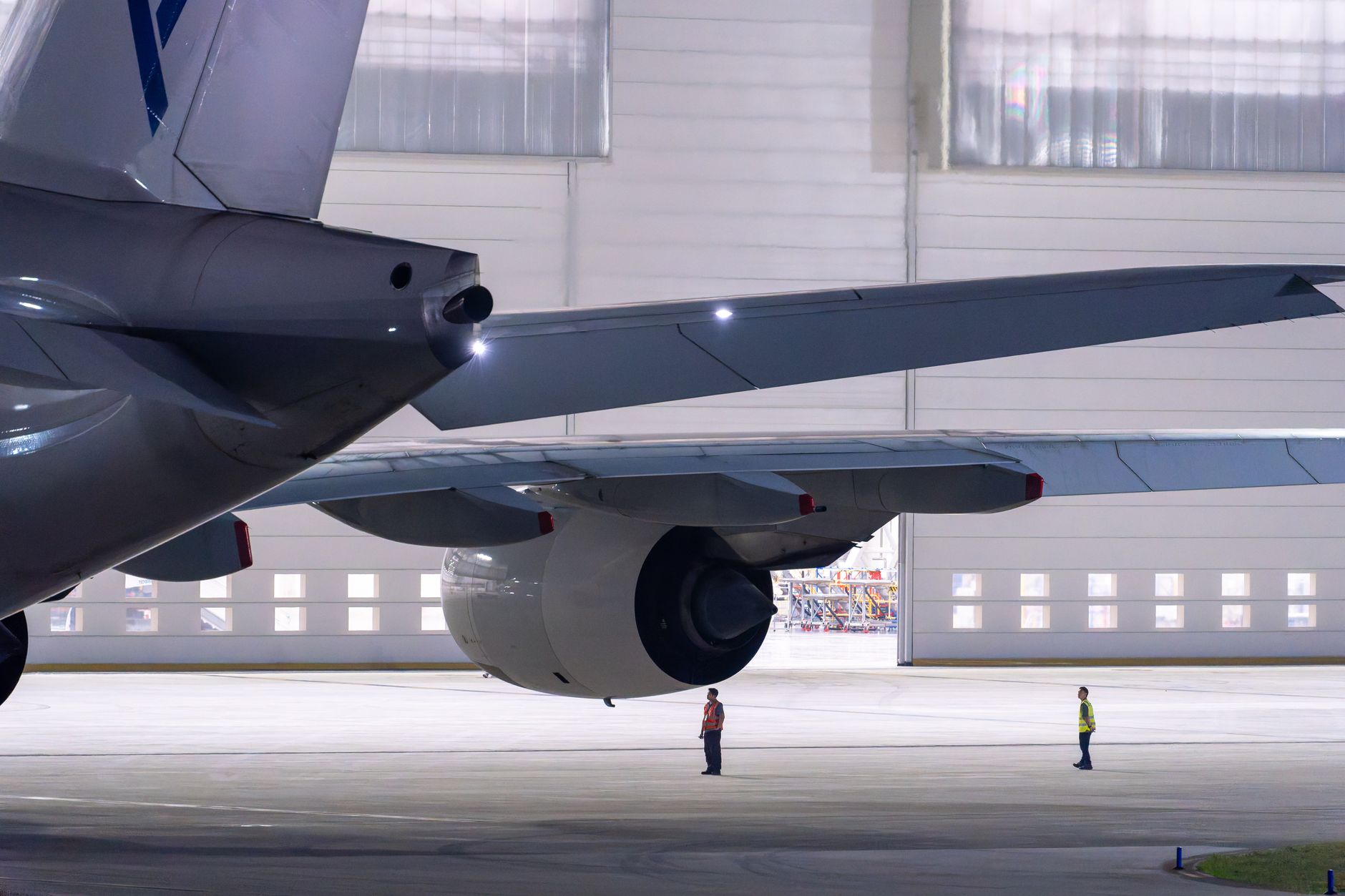
Review the vacancy carefully, then research the employer’s operation. An aircraft maintenance role at a major airport may involve overnight checks and early departures, while an airline operations role may involve continuous 24-hour coverage. An airport fire service, air traffic service provider or cargo operator will have its own fatigue controls and rostering arrangements.
Prepare specific questions, such as:
- What is the usual shift rotation?
- How far in advance are rosters published?
- How many consecutive night shifts are normally scheduled?
- What are the standard shift lengths?
- How are overtime and short-notice cover managed?
- What breaks and welfare facilities are available overnight?
- What fatigue-reporting or fatigue-risk-management process is in place?
These questions show that you are assessing the role realistically rather than treating the roster as an afterthought. If the position is in aircraft maintenance, it is also useful to understand how shift communication is controlled. Read our guide to the aircraft maintenance shift handover before your interview.
Understand the fatigue risk
The International Civil Aviation Organization defines fatigue as a physiological state of reduced mental or physical performance capability caused by sleep loss, extended wakefulness, circadian phase and workload. It can impair alertness and the ability to perform safety-related duties.
Review the ICAO fatigue management guidance and, where relevant, the UK CAA fatigue-risk-management information before the interview. These resources help explain why fatigue is an operational hazard requiring structured controls, not simply a personal inconvenience.
Shift-work fatigue arises from the conflict between the demands of night work and the human circadian system, the 24-hour body clock that regulates physiological processes. Daytime sleep is typically lighter, shorter and more easily disrupted by light, noise and social obligations. Over successive shifts, this can create a cumulative sleep debt.
This matters in an interview because aviation employers need people who recognise fatigue as a hazard, not as a test of personal toughness. A poor answer is:
“I can work indefinitely without sleep.”
A stronger answer is:
“I understand that fatigue can affect judgement, reaction time and attention. I would manage my sleep routine, use rest periods properly and report fatigue before it created a safety risk. If I were not fit to perform a safety-critical task, I would follow the organisation’s reporting and escalation procedures.”

The issue is not whether you have worked a long shift before. It is whether you understand when performance may be deteriorating and what action is required.
Know the effects of extended wakefulness
You may be asked how fatigue affects aviation performance. Be prepared to explain that prolonged wakefulness can produce impairment comparable with alcohol intoxication. Commonly cited research identifies substantial impairment after approximately:
- 17 hours awake: equivalent to around 0.05% BAC
- 24 hours awake: equivalent to around 0.10% BAC
These are comparisons of impairment, not permission to treat fatigue as an alcohol calculation. They underline why pushing through a night shift can be unsafe, particularly when the work involves aircraft release, maintenance certification, driving airside or other safety-critical decisions. Always follow the employer’s approved fatigue procedures and the applicable authority requirements, including the UK CAA operational fatigue guidance where it applies.

Fatigue risk is increased by:
- Short rest periods
- Early reporting times
- Consecutive night duties
- Long duty periods
- High workload or multiple tasks
- Monotony and reduced stimulation
- Poor sleep conditions
- Additional commuting or caring responsibilities
- Illness, medication or emotional strain
In an interview, connect the risk to the job. For example, an aircraft maintenance candidate could say:
“On a night maintenance shift, fatigue could affect inspection quality, tool control, paperwork accuracy or communication during a handover. I would use task discipline, independent checks and effective handovers, while escalating concerns if fatigue affected my ability to work safely.”
Prepare a realistic personal fatigue-management plan
Interviewers may ask how you would prepare for a run of night shifts. Give a practical answer rather than relying on willpower.
Your plan might include:
- Protecting sleep: arranging a dark, quiet and cool sleeping environment, and informing family or housemates when you need uninterrupted rest.
- Managing the transition: gradually adjusting sleep and meal times before the first night shift, where the roster allows.
- Using breaks properly: treating breaks as recovery time rather than automatically using them for non-work tasks.
- Managing food and hydration: maintaining a consistent diet and avoiding excessive caffeine late in the duty period or immediately before planned sleep.
- Planning transport: ensuring that the journey home after a night shift does not introduce an additional fatigue risk.
- Recognising warning signs: monitoring reduced concentration, repeated mistakes, irritability, slowed reactions, microsleeps or difficulty retaining information.
- Speaking up early: using the employer’s fatigue-reporting, supervisor or occupational-health process before performance becomes unsafe.
Do not present exercise, nutrition or caffeine as substitutes for sleep. They can support general wellbeing, but they do not remove the effects of accumulated sleep loss.
Be familiar with the UK working-time baseline
For UK-based roles, the Working Time Regulations 1998 provide important minimum protections, although aviation-specific rules, company procedures and collective agreements may impose additional requirements. Flight crew and some operational roles may also be subject to separate duty-time and fatigue requirements.
Relevant provisions commonly discussed for night work include:
- Night workers should not work more than an average of eight hours in each 24-hour period, normally assessed over a 17-week reference period.
- Night workers are entitled to a free health assessment before beginning night work.
- Workers should normally receive at least 11 consecutive hours of rest between working days.
- Where a medical condition is aggravated by night work, the worker may need to transfer to day work where medically required.
These provisions do not mean that every aviation roster will look the same, nor do they replace sector-specific arrangements. The useful interview point is that you understand rest and health protections as part of safe operations, not as obstacles to productivity. For regulated aviation roles, check the applicable authority requirements, such as the EASA air operations framework or relevant UK CAA guidance.
You could ask:
“How does the organisation monitor compliance with working-time requirements and manage fatigue for safety-critical duties?”
That is a more informed question than simply asking how much overtime is available.

Prepare evidence of reliability under pressure
Use specific examples from work, training, study, volunteering, military service or other regulated environments. Structure your answers using Situation, Task, Action and Result.
Prepare examples showing that you have:
- Remained accurate during a long or demanding duty
- Managed competing priorities without skipping safety checks
- Handed over incomplete work clearly
- Challenged an unsafe instruction respectfully
- Reported an error or near miss
- Asked for support when workload became excessive
- Adapted to changing operational priorities
- Maintained professional communication during unsocial hours
A strong example should explain what you personally did. Avoid claiming that you never get tired or that you routinely work through breaks. Employers are looking for controlled, repeatable behaviour rather than bravado. This is closely related to the professional standards discussed in our article on why aircraft maintenance is safety-critical.

Revise the technical and regulatory requirements for the role
Shift-work preparation does not replace technical preparation. Review the job description and identify the licences, approvals, records and experience the employer is likely to discuss.
For UK aircraft maintenance positions, be clear about the status of your UK CAA Part-66 licence, if applicable. If you hold or are pursuing an EASA Part-66 licence, explain that it is an EASA credential and do not present it as automatically interchangeable with a UK CAA licence. The employer may also want evidence of practical experience and task exposure. The UK CAA Part-66 information is a useful starting point for checking the current licensing framework.
For maintenance roles, bring or be ready to discuss:
- Licence category and type ratings, where relevant
- Training and examination status
- Recent maintenance experience
- Experience on the employer’s aircraft type or operating environment
- Human factors and continuation training
- Technical records and handover standards
- Evidence of practical experience, including a CAP 741 logbook where relevant to UK pathways
CAP 741 is useful evidence of structured aircraft maintenance experience, but it should support, not replace, a clear explanation of your actual responsibilities and competence. Before your interview, review our guidance on completing a CAP 741 logbook and the common CAP 741 mistakes that can delay an application.
Applicants moving from UK military aviation should explain how their experience is being recognised through the relevant UK Ministry of Defence and UK CAA pathways. Be precise about what has been formally credited, what remains outstanding and how military task records map to the employer’s requirements. International candidates should clearly identify whether their licence is UK CAA, EASA, FAA or another national credential. An FAA A&P certificate, for example, is a US qualification and should not be described as a UK or EASA Part-66 licence.
Expect scenario-based fatigue questions
Interviewers may use scenarios to test judgement. Prepare concise responses to questions such as:
“What would you do if you felt too fatigued to carry out a safety-critical task?”
State that you would stop or avoid accepting the task if necessary, notify the appropriate supervisor, use the organisation’s fatigue or fitness-to-work process and ensure that the task was reassigned or controlled safely. Do not suggest hiding the problem to protect attendance figures.

“What if a colleague appears fatigued?”
Approach them professionally, check whether they are fit to continue and inform the appropriate supervisor if there is a safety concern. Aviation depends on a just culture in which people can report hazards without fear of inappropriate blame, while still being accountable for safe conduct.
“How would you manage a short rest period between shifts?”
Explain that you would follow the published roster and rest requirements, protect sleep, plan transport and raise concerns early if the schedule created a fitness-for-duty risk. Do not imply that you would routinely accept inadequate rest.
“Would you work overtime after a night shift?”
The correct answer depends on your actual fitness, the hours already worked and company procedures. Explain that operational need does not override safety. You would assess whether you were fit, comply with working-time and fatigue controls and discuss the decision with the responsible manager.

Plan the interview logistics around your body clock
If the interview is scheduled early in the morning or after a night duty, plan carefully. Avoid attending directly after a demanding shift if an alternative is available. Allow time for travel, parking and security, particularly if the interview is airside or at a large airport.
For online interviews, test your equipment and choose a quiet environment. If you currently work nights, arrange the appointment at a time when you can be alert. Your energy, concentration and communication will form part of the interviewer’s impression of your operational readiness.
The message employers want to hear
A good shift-work candidate is not someone who claims that nights have no effect on them. It is someone who understands the limits of human performance and manages them professionally.

Your interview preparation should demonstrate four things:
- You understand the roster and its practical demands.
- You recognise fatigue as an aviation safety hazard.
- You have a credible plan for sleep, travel, health and recovery.
- You will report fatigue, protect colleagues and follow the organisation’s procedures.
That combination of technical competence, personal responsibility and sound fatigue awareness is what makes an aviation shift-work applicant credible.
For further career guidance, explore the AeroTech Careers Blog or browse current aircraft mechanic jobs.

Calculate Your Potential Salary! Use our Aircraft Engineer Salary Calculator to benchmark your expectations by experience and location before your interview.



Login or register to join the conversation.
Join the discussion
0 comments