


.jpg)
If you’re a licensed aircraft engineer, mechanic, or avionics technician, create your free AeroTechCareers profile to showcase your competencies and be found by recruiters actively searching for engineers like you.
What can a UK Part-66 A licence engineer certify? Privileges and limitations explained
A UK Part-66 A licence allows an engineer to certify certain limited line-maintenance tasks without holding a B1 or B2 licence. Its privileges are restricted by the licence category, aircraft type, task, company authorisation and the engineer's recent maintenance experience. Engineers should also consult the CAA's current Part-66 guidance before exercising certification privileges.
What is a UK Part-66 A licence?
A Part-66 A licence is an aircraft maintenance licence for certifying limited line maintenance. It sits between working as a mechanic under supervision and holding a broader B1 or B2 aircraft maintenance licence.
An A licence may allow an engineer to certify tasks such as:
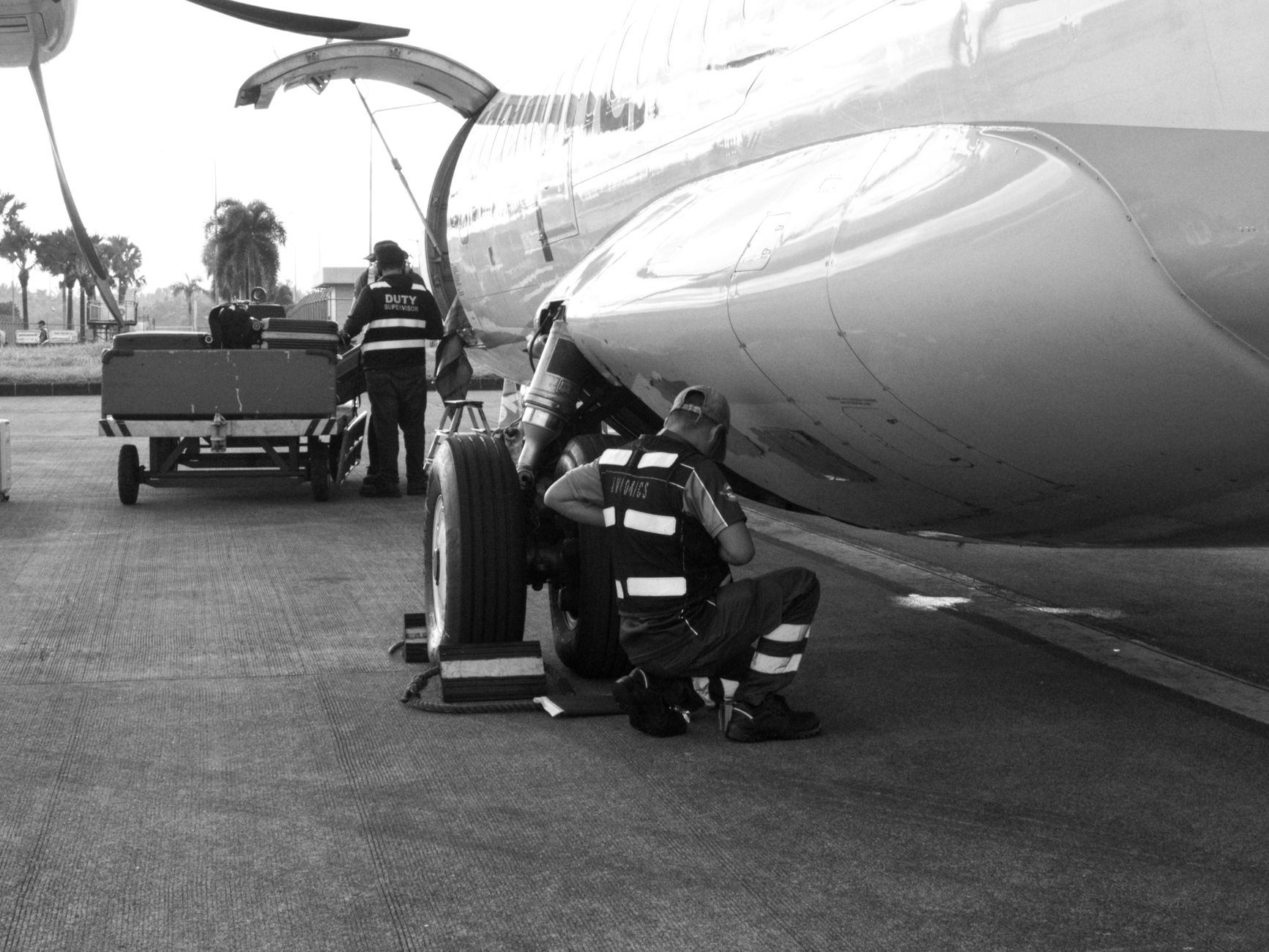
- Wheel and tyre changes
- Brake unit or brake pack replacement
- Battery replacement
- Oxygen servicing
- Life vest replacement
- Emergency equipment replacement
- Simple defect rectification
- Replacement of selected line-replaceable units
- Certain scheduled maintenance tasks
- Basic inspections and servicing activities
The precise scope depends on the aircraft type, the approved maintenance organisation's procedures and the certifying staff authorisation issued to the engineer.
What can an A licence engineer certify?
The central privilege of an A licence is the ability to issue a certificate of release to service for maintenance tasks within the A category privileges. In practice, this generally concerns suitable work carried out during line maintenance.
Simple defect rectification
An A licence engineer may be able to rectify and certify straightforward defects identified during transit checks, daily checks or similar line-maintenance activities.
Examples may include the replacement of a defective:
- Cabin light
- Passenger service unit component
- Seat belt or restraint component
- Lavatory item
- Galley fitting
- Interior panel
- Emergency equipment item
The defect must fall within the relevant task scope and must be rectified using approved maintenance data.
Component replacement
A licence holder can often certify the replacement of specified components, provided that the task is included in the organisation's approved procedures and the engineer's authorisation.
Examples may include:
- Wheels
- Batteries
- Brake units
- Oxygen bottles
- Fire extinguishers
- Pumps
- Valves
- Line-replaceable units
Replacing a component does not automatically make a task certifiable by an A licence holder. The specific component and task must be permitted by the applicable maintenance data and company authorisation.
Certain scheduled maintenance tasks
An A licence may cover selected scheduled maintenance tasks carried out during line maintenance. These are generally routine tasks that do not require extensive troubleshooting, structural work or complex system knowledge.
The task must be appropriate to the licence category or subcategory being used. For example, practical experience recorded on a B1.1 aircraft does not automatically demonstrate experience for a B1.3 aircraft or for a B2 licence. CAA guidance requires practical tasks to identify the relevant licence category or subcategory and to reflect the privileges of that licence.
An A licence is not a general sign-off qualification
Holding the licence does not, by itself, allow an engineer to certify maintenance anywhere or on any aircraft. The engineer will normally need all of the following:
- A valid UK Part-66 licence
- The correct category or subcategory
- The relevant aircraft type rating, where required
- Appropriate practical experience
- Current certification privileges
- Authorisation from an approved Part-145 or Part-CAO organisation
- Approved maintenance data and procedures for the task
The Part-145 or Part-CAO organisation determines which tasks the engineer is authorised to certify. That authorisation may be narrower than the full privileges shown on the licence.
For example, an engineer may hold an A licence with an aircraft type rating but be authorised by the employer to certify only a defined list of transit tasks. The engineer cannot sign off additional work merely because it appears to fall within the general A category.
What cannot an A licence engineer certify?
An A licence does not normally allow an engineer to certify:
- Major structural repairs
- Complex modifications
- Heavy base maintenance
- Extensive system troubleshooting
- Major overhaul work
- Maintenance outside the licence category
- Work outside the applicable aircraft type rating
- Tasks that the engineer did not perform or properly supervise
- Work for which the engineer does not hold organisational authorisation
An A licence holder cannot certify work simply because another engineer completed it. The certification privilege is connected to the work performed, the applicable authorisation and the individual's competence.
Where maintenance falls outside the A licence scope, it may need to be certified by an appropriately rated B1, B2, B3 or C licence holder, depending on the task and aircraft. For comparisons between different national certification systems, see our guide to EASA licensed engineers and FAA A&P mechanics.
The importance of the aircraft type rating
A Part-66 A licence is normally associated with particular aircraft type ratings. The rating identifies the aircraft on which the certification privileges may be exercised. The EASA Part-66 aircraft maintenance licence information provides useful regulatory context for licence categories, ratings and privileges.
Differences between aircraft variants must also be considered. For example, A320 and A321 aircraft may be covered by the same aircraft type rating, so separate Part-147 difference training is not necessarily required. Additional training may nevertheless be needed to address relevant differences in equipment, configuration or procedures.
An approved maintenance organisation may provide this training before issuing certifying staff authorisation. An A licence and aircraft type rating do not remove the need to understand the specific aircraft variant, its equipment configuration and the organisation's procedures.
If you are planning your licensing route, our guide to becoming an A licensed aircraft maintenance engineer explains the broader qualification process.
Limitations on an A licence
An A licence can contain limitations or exclusions restricting the aircraft, systems or tasks that the holder may certify.
Limitations can arise from:
- The route used to obtain the licence
- Missing practical experience
- Incomplete type training
- Restrictions attached to a licence category
- Exclusions applied to an aircraft type rating
- Insufficient evidence submitted to the CAA
If the required experience and evidence are later provided, the holder may be able to apply to have limitations removed.
To remove limitations from type ratings, the CAA requires appropriate practical maintenance experience on the relevant aircraft. This experience must be submitted in a form acceptable to the CAA and signed by the appropriate authorised signatory.
The current CAA fee for an application to remove limitations from type ratings is £74 per application. Fees can change, so applicants should check the latest CAA Part-66 application information before applying.
Licence validity and certification privilege validity
The Part-66 aircraft maintenance licence and the certification privileges are not exactly the same thing.
The validity of the Part-66 licence is not affected by maintenance recency. However, the ability to exercise the privileges under 66.A.20 is affected by recent maintenance experience.
To continue exercising certification privileges, the engineer must meet the applicable recent-maintenance-experience requirements. The approved Part-145 or Part-CAO organisation, or the certifying staff concerned in accordance with M.A.801(b)1, is responsible for ensuring that those privileges remain valid.
During an organisation review under provisions such as 145.B.30, M.B.604 or CAO.B.055, or during an on-the-spot check, the CAA may ask a licence holder to provide documentary evidence of compliance with 66.A.20(b).
The CAA does not generally investigate whether a licence holder is currently practising maintenance as a condition of licence renewal. Renewal and the continued ability to exercise certification privileges are separate matters.

Accurate experience records are essential when demonstrating recent maintenance activity. Our guidance on checking a CAP 741 logbook before a licence application can help engineers organise supporting evidence.
What happens if the licence expires?
Part-66 certification privileges cannot be exercised once the licence has expired. No certification privileges may be exercised until the renewed licence has been received and signed by the licence holder.
If the engineer has confirmation that a renewal application was submitted to the CAA, the privileges may continue to be exercised after the application has been posted and up to the licence expiry date. This does not extend the licence beyond its expiry date.
Once the licence has expired, the engineer must wait until the renewed licence has been received and signed before certifying maintenance again.
The practical meaning of an A licence
An A licence provides a valuable but clearly defined certification privilege. It allows an engineer to move beyond carrying out maintenance under supervision and to certify suitable line-maintenance tasks.
It is not blanket permission to sign off an aircraft. Every certification must remain within:
- The Part-66 licence category
- The aircraft type rating
- Any licence limitations
- The engineer's recent experience
- The engineer's personal competence
- The approved organisation's authorisation
- The applicable maintenance data
Used correctly, an A licence can help an engineer build experience, take on greater responsibility and progress towards broader B1 or B2 privileges. Certification authority comes from the combination of the licence, aircraft rating, practical experience and organisational approval, not from the licence document alone.



Login or register to join the conversation.
Join the discussion
0 comments