



If you’re a licensed aircraft engineer, mechanic, or avionics technician, create your free AeroTechCareers profile to showcase your competencies and be found by recruiters actively searching for engineers like you.
How to Build an EASA OJT Compliance Report for a Maintenance Organisation
An EASA On-the-Job Training (OJT) compliance report demonstrates that training has been planned, delivered, supervised, assessed and recorded in accordance with Part-66 requirements. It is not simply a list of tasks completed by a trainee. It must provide an auditable link between the aircraft type, approved training programme, maintenance records, final assessment and licensing application.
The report should enable the organisation, competent authority and licensing authority to answer five questions:
- Was OJT required for this licence application?
- Was it conducted under an acceptable approval?
- Did the trainee complete a representative range of type-related maintenance tasks?
- Were the tasks properly supervised and independently assessed?
- Is the evidence sufficiently controlled to support the issue of the first type rating?
When EASA OJT is required
OJT is not required to obtain a basic EASA Part-66 aircraft maintenance licence. The basic licence is obtained through examinations and practical maintenance experience in accordance with 66.A.30. Applicants should also distinguish OJT from the wider experience record required for a licence application. Our guide to building qualifying Part-66 B1 experience explains how that separate evidence is normally developed and recorded.
OJT becomes mandatory when an applicant adds a first aircraft type rating in a category or subcategory, under 66.A.45 and Appendix III to Annex III of Regulation (EU) No 1321/2014. The applicable rules can be checked in the EASA Easy Access Rules for Continuing Airworthiness.
This distinction should appear near the beginning of the report. It establishes why the OJT programme exists and prevents the organisation from presenting general employment experience as type-rating OJT.

The report should identify:
- The applicant’s full name and Part-66 licence number, if already issued.
- The relevant category or subcategory.
- The aircraft type and, where relevant, the engine or variant.
- The licensing authority responsible for the applicant’s Part-66 licence.
- The reason OJT is required.
- The applicable Part-66 references, including 66.A.45 and Appendix III.
For a UK Part-66 application, the relevant licensing authority is normally the UK CAA. For an EASA Part-66 licence, it is the competent authority of the applicable EASA Member State. A UK organisation conducting training for an EASA licence must therefore confirm that the licensing authority will accept its OJT procedure and evidence. The UK CAA Part-66 information is a useful reference for UK applicants, but the receiving authority’s requirements must always be confirmed directly.
Confirm the organisation’s approval status first
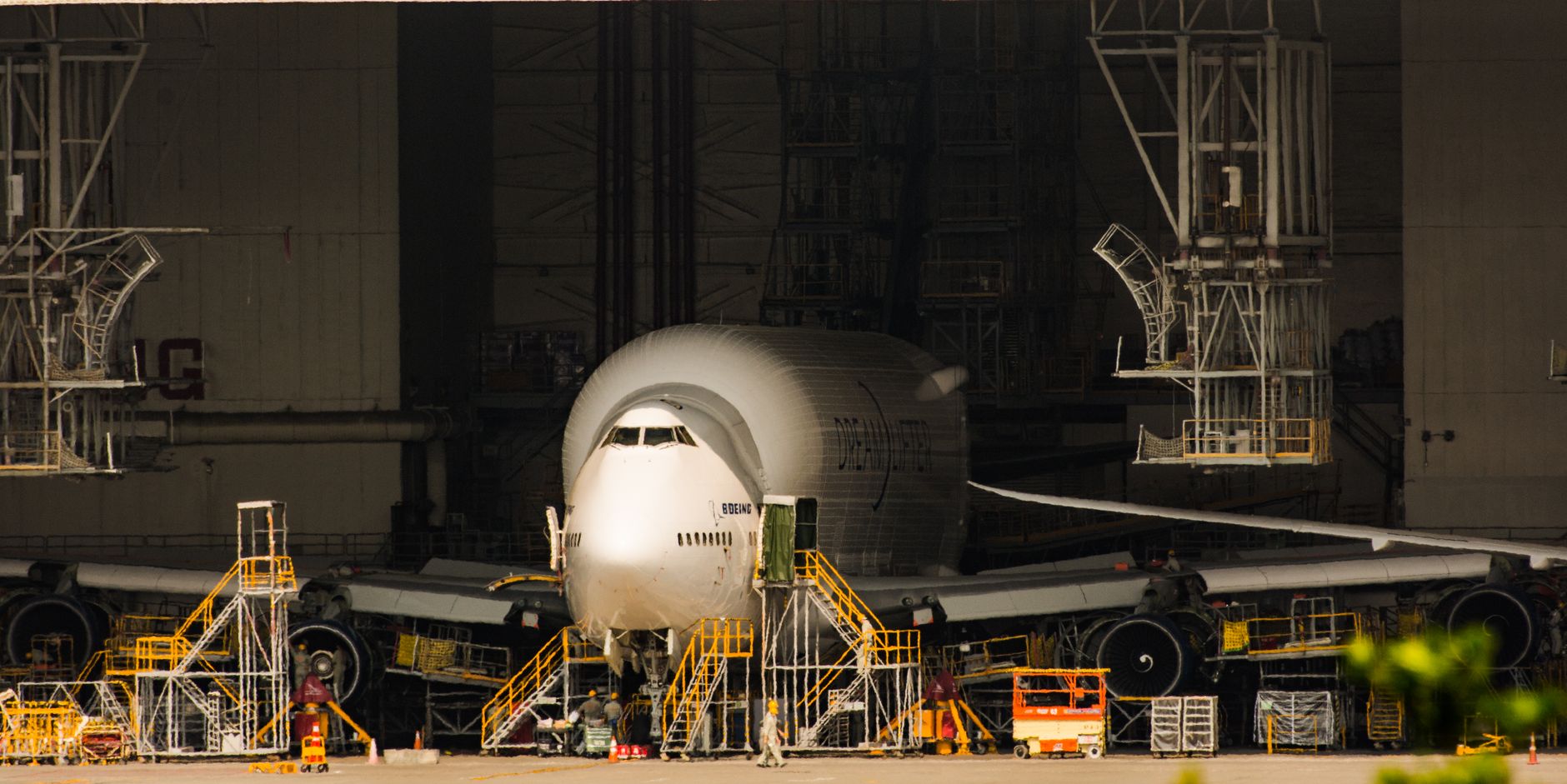
The report should establish that the maintenance organisation was eligible to conduct OJT before listing any completed task.
The evidence should include:
- The Part-145 approval certificate.
- The approval reference and validity dates.
- The approved ratings and scope of work.
- The relevant aircraft type within the organisation’s approval scope.
- The organisation’s principal place of business.
- The competent authority responsible for the organisation.
- The applicable MOE procedure or separately approved OJT procedure.
- The dates during which OJT was conducted.
OJT consists of supervised, real-world maintenance performed on a specific aircraft type within an appropriately approved maintenance organisation. The trainee must complete a representative cross-section of maintenance tasks under supervision, with each task linked to an actual maintenance record or job card.
For a Part-145 organisation with an A rating covering the relevant aircraft type, the OJT procedure will commonly be controlled through the Maintenance Organisation Exposition. Many organisations place it in MOE Chapter 3.15, titled “OJT Procedure”, although the exact chapter reference may differ between expositions.

The report should not assume that an MOE procedure is automatically acceptable to every licensing authority. EASA guidance, including FAQ 46840, is particularly relevant where the licensing authority and the organisation’s competent authority are different. The organisation should verify the current position using the EASA official FAQ resources and obtain written confirmation where necessary.
For a Part-145 organisation located outside the EASA Member States, the organisation’s competent authority is EASA. EASA is not itself a licensing authority. An OJT procedure for such an organisation cannot therefore be placed in the MOE on the assumption that EASA has approved it for a Part-66 licensing application. The licensing authority must decide whether it accepts the organisation’s OJT arrangements, in accordance with the applicable AMC to Section 6 of Appendix III.
The report should include written evidence of acceptance where the competent authority and licensing authority are not the same.

Define the OJT programme before work starts
A compliant report should show that the programme was approved before the trainee began accumulating tasks. Selecting ordinary maintenance activity retrospectively from an employment history is weak evidence and may not satisfy the licensing authority.
The programme should define:
- The aircraft type and configuration.
- The minimum OJT duration or task requirement.
- The task selection method.
- The required range of systems and maintenance activities.
- The supervision arrangements.
- The competence standards.
- The records and signatures required.
- The final assessment method.
- The qualification and independence requirements for the assessor.
- The process for missed, repeated or rejected tasks.
- The process for controlling amendments to the programme.
The task list should be representative rather than concentrated in one familiar area. Depending on the aircraft type and licence category, it may need to cover structures, powerplant, mechanical systems, electrical systems, avionics, inspection, servicing, defect rectification and scheduled maintenance. The organisation should also explain how task selection supports the category or subcategory being applied for.

Each selected task should be mapped to:
- The aircraft maintenance manual, task reference or other approved data.
- The relevant ATA chapter or system.
- The aircraft registration or component identification.
- The work order or job card number.
- The date of performance.
- The trainee’s signature.
- The supervisor’s countersignature.
- The final assessment status.
Control the task evidence
The task record is the core of the OJT compliance report. An entry without traceable maintenance documentation is unlikely to provide sufficient evidence.
Each entry should demonstrate that:
- The task was performed on the stated aircraft type.
- The task was within the organisation’s approval scope.
- The trainee personally participated in the work.
- The work was supervised by an authorised and competent person.
- The task was completed using current approved maintenance data.
- The record can be traced to a real job card or work order.
- Any independent inspection or certification requirement was met.
- The trainee’s and supervisor’s signatures are attributable and controlled.
The report should contain copies of the relevant job cards or controlled references to them. It should not rely exclusively on a spreadsheet summary. Sensitive technical records may remain in the organisation’s maintenance system, provided the report identifies the system, record number and retrieval method.

Incomplete work orders are a significant weakness. A work order closed without a complete parts traceability chain may fail the return-to-service test. OJT evidence should therefore be linked to controlled maintenance records and must not be recreated after the event.
Where a task involves an independent inspection, the organisation should document who performed it, why it was required and how independence was maintained. See our guide to who can perform an independent inspection for the relevant qualification, authorisation, competence and independence considerations.
Establish supervisor and assessor competence
The report should identify every supervisor and assessor by name, approval or authorisation reference, and role.

For each supervisor, record:
- The Part-66 licence or other relevant authorisation.
- Aircraft type approval or competence.
- Part-145 authorisation, where applicable.
- The dates and tasks supervised.
- The signature or electronic approval identifier.
Supervision must be meaningful. A countersignature should confirm that the supervisor observed or adequately controlled the work and verified the trainee’s competence. It should not be used as a bulk approval at the end of a placement.
The final assessment should be conducted by an appropriately qualified and independent person. An assessor should not simply validate their own supervision without suitable separation of duties. This is consistent with the wider safety principles surrounding independent inspection and maintenance error management.
The report should include:
- The assessor’s identity and qualifications.
- Evidence of aircraft-type competence.
- The assessment date.
- The assessment method.
- The practical or oral assessment criteria.
- Any deficiencies identified.
- Corrective action or repeat assessment details.
- The final recommendation.
The final assessment is not a formality. It confirms that the trainee can apply the knowledge and skills demonstrated during OJT, rather than merely having been present during maintenance.
Include the trainee’s supporting experience record
The OJT report should remain focused on type-rating training, but it may need to reference the trainee’s wider maintenance experience to establish identity, continuity and licensing context.

For UK applicants, relevant experience is commonly supported through a CAP 741 logbook or equivalent controlled experience record. The report should cross-reference, rather than duplicate, the relevant entries. The logbook does not replace the OJT task records. Engineers can also review our guidance on how to complete a CAP 741 logbook and use the Part 66 Logbook Analysis product to identify gaps in their experience evidence.
Where the applicant has military maintenance experience, UK Ministry of Defence service recognition or the applicable UK CAA pathway should be documented separately. Military experience may support Part-66 experience requirements, but it does not automatically demonstrate completion of the required first-type OJT. The report must still show the type-specific tasks, supervision and assessment.
Preparing your Part-66 evidence? Analyse Your Logbook Today and check whether your recorded experience is organised clearly for review.
Build a clear compliance matrix
A compliance matrix makes the report easier for an authority or auditor to review. It should identify the requirement, the supporting evidence and its status.
- Correct Part-66 category and first type rating: Licence and application details.
- OJT required under 66.A.45 and Appendix III: Regulatory applicability statement.
- Organisation approval covers the aircraft type: Part-145 certificate and ratings.
- OJT procedure accepted: MOE reference or licensing-authority acceptance.
- Representative task coverage: Approved task list and task map.
- Actual maintenance performed: Job cards and work-order references.
- Supervision provided: Supervisor records and signatures.
- Approved data used: Maintenance-data references.
- Parts and configuration traceability maintained: Parts records and work-order links.
- Independent final assessment completed: Assessment report.
- Non-conformities closed: Corrective-action records.
- Records retained and retrievable: Record-control statement.
The report should include a formal conclusion signed by the OJT coordinator, the accountable manager or nominated postholder, and the independent assessor where required by the organisation’s procedure.

Manage the report as a controlled compliance record
A paper report can be compliant, but uncontrolled manual systems create avoidable risks. The organisation should apply document control, revision status, access permissions, signature controls and retention periods consistent with its approved procedures.
Structured digital compliance tracking can improve audit performance by linking task records, approvals, signatures and corrective actions in a controlled system. It does not, however, replace the underlying regulatory requirements or the need for reliable maintenance evidence. This is particularly important when digital tools are used to support technical records, as explained in our article on aircraft maintenance in the digital age.
The organisation should also monitor:
- Expiring Part-66 licences.
- Aircraft-type authorisations.
- Recurrent training.
- Supervisor competence.
- Assessor authorisations.
- Open task discrepancies.
- Unretrieved job cards.
- Missing signatures.
- Record amendments.
- Changes to the applicable MOE or Part-66 procedure.
An expired Part-66 licence or lapsed required recurrent training can invalidate the authority of a person signing maintenance records. The report should therefore verify the currency of all personnel whose signatures support the OJT evidence. There is no general EASA grace period that makes an otherwise unauthorised maintenance release valid.
Final review before submission
Before releasing the report to the licensing authority, the organisation should conduct an independent completeness review. The review should be separate from the trainee’s day-to-day supervision wherever practicable.
The reviewer should confirm that:
- Every task is traceable to a real aircraft maintenance record.
- The aircraft type and configuration are correctly identified.
- The organisation held the relevant approval throughout the OJT period.
- The task range is representative and not artificially narrow.
- Supervisors were competent and authorised.
- Signatures are complete and attributable.
- Rejected or repeated tasks are clearly documented.
- The final assessment was independent and satisfactory.
- The licensing authority’s acceptance requirements have been met.
- The complete evidence package can be retrieved without relying on individual staff members.
A strong EASA OJT compliance report is an evidence package, not merely a completed checklist. It connects Part-66 applicability, Part-145 approval, controlled maintenance records, supervised task performance and independent assessment into one verifiable chain. That chain enables the licensing authority to determine whether the first aircraft type rating is supported by compliant, type-specific maintenance experience.

For more guidance on licensing, training and maintenance careers, visit the AeroTech Careers Blog.



Login or register to join the conversation.
Join the discussion
0 comments